
Push the cup off the table
Jump onto the table and give it a nudge. The cup slides over the edge, falls, and breaks before points appear.
Game development / 2026
In development · 3D interaction prototype
An independent Godot game project that turns a mischievous-cat idea into a local 3D prototype, with movement, contextual interactions, scoring, and repeatable resets. Currently in development, with playtesting next.
See prototype screenshots ↓The story
There is a cup right at the edge of the table, a sofa that looks perfect for scratching, and a fish nearby. How many things in this room can I mess with?
Jump onto the table and give it a nudge. The cup slides over the edge, falls, and breaks before points appear.
Leave scratches and stuffing on the sofa. Carry a fish while running and jumping, then drop it and pick it up again. Rewards count once per round.
Hide your body while your tail sticks out. Interact again to leave the box and explore the room.
The next moment to build
Fake Cat explores the contrast between causing trouble and looking innocent. The planned Perfect Cat moment lets players act blameless when the owner turns around. The current prototype establishes pushing, scratching, stealing, and hiding.
Prototype showcase
These are actual screenshots from the v0.1.7 prototype, using simple original models. It currently runs as a Godot project; browser and iOS builds are not available yet.
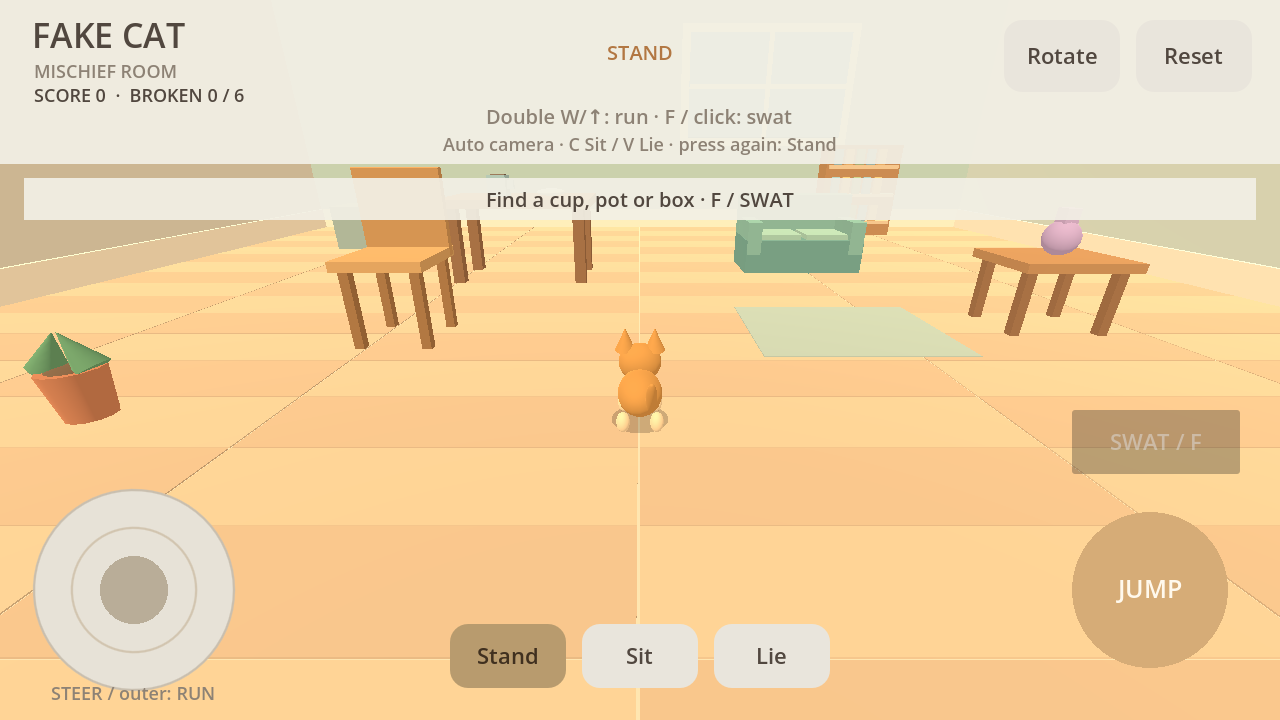
A third-person camera follows the orange cat through a single room with tables, chairs, a sofa, and interactive props.
View full size ↗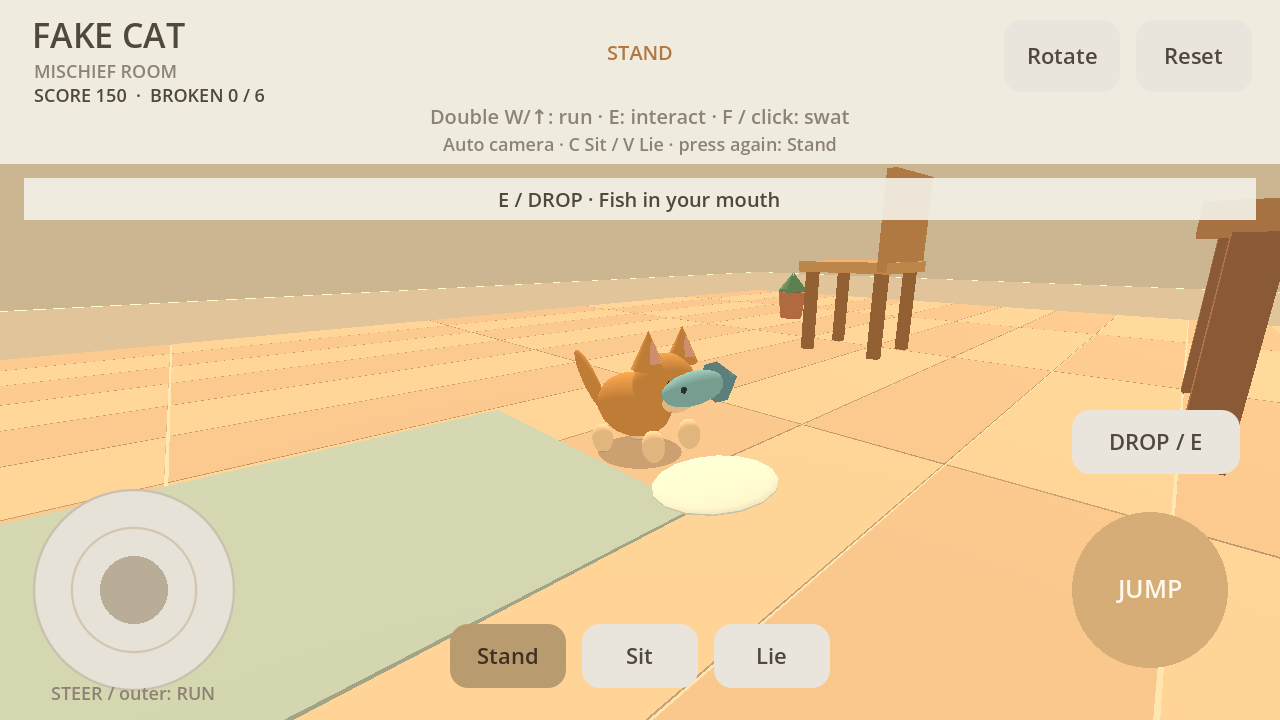
Carrying works with movement: the cat can still run, jump, sit, or lie down with the fish.
View full size ↗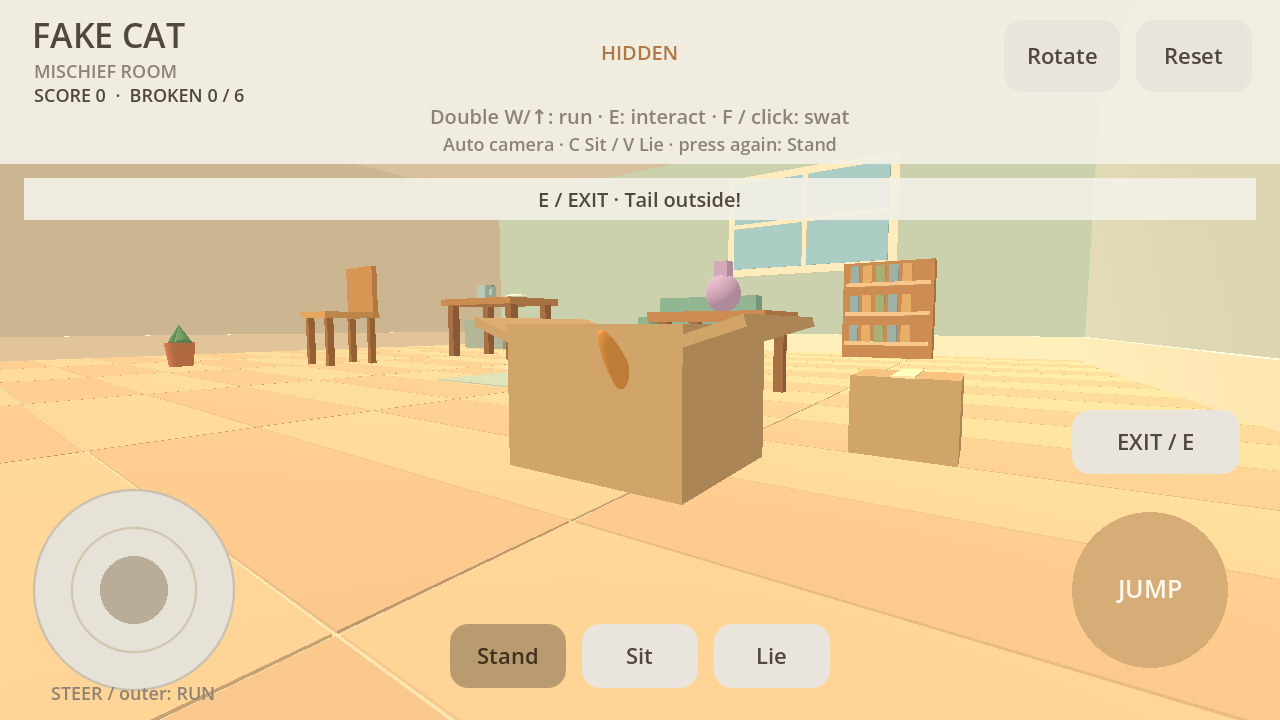
Hiding blocks movement and swatting. This version explores the hiding action; owner detection is planned for a later stage.
View full size ↗Engineering decisions
Connect controls, state, and feedback in a small prototype that can be checked repeatedly.
Hold a direction to keep turning, double-tap forward to run, and vary jump height by holding the button. Sitting or lying down preserves momentum without further propulsion, making posture part of play.
Contextual interactions check both 3D distance and line of sight. Getting close shows a prompt; the player chooses when to act, without interacting through furniture.
The character and furniture have collision. Cups, fragments, and prop reactions use tweens and state changes, keeping reactions controllable while playtests assess the fun.
Reset restores the cat, props, collisions, carried items, and scores together. Regression checks cover resets during animation, hiding with a fish, and duplicate rewards.
Godot / GDScript · Separate character, camera, interaction, and UI responsibilities · Local offline execution